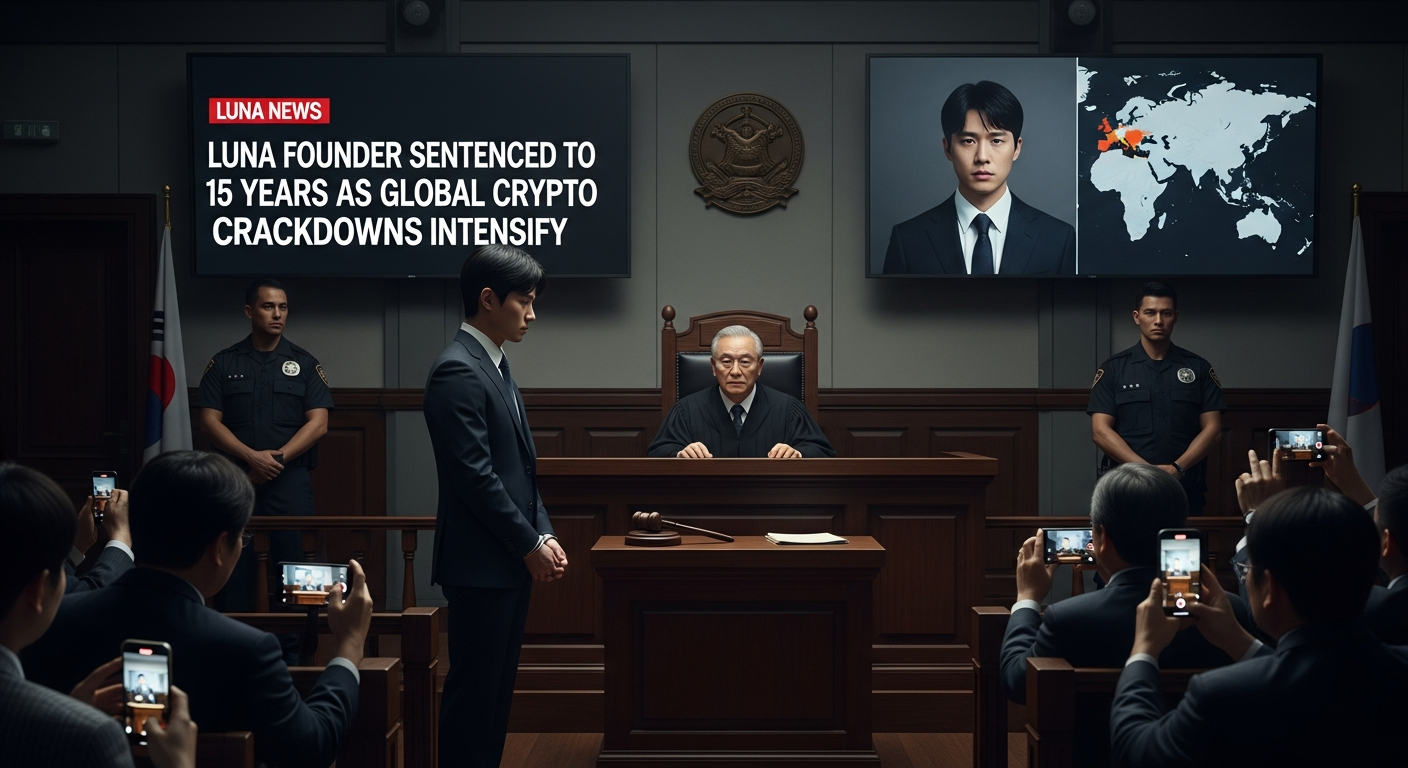
The global crypto industry faced another major reckoning this week as Do Kwon, co-founder of Terraform Labs, was sentenced to 15 years in prison for fraud tied to the collapse of the Terra ecosystem—one of the most devastating failures in cryptocurrency history.
The sentencing marks a watershed moment in the global regulatory response to crypto-related misconduct, reinforcing a clear message from authorities: large-scale digital asset fraud will be prosecuted with the same severity as traditional financial crimes.
The Fall of Terra and Its Global Impact
Terraform Labs rose to prominence through its algorithmic stablecoin TerraUSD (UST) and companion token LUNA, once valued at tens of billions of dollars. The system promised stability without traditional reserves—a design that unraveled catastrophically in 2022.
When UST lost its dollar peg, a rapid collapse wiped out an estimated $40 billion in market value, triggering panic across crypto markets and contributing to a broader industry downturn.
Millions of retail investors worldwide suffered losses, while institutional confidence in algorithmic stablecoins was severely shaken.
Court Ruling Signals Zero Tolerance
Prosecutors argued that Kwon knowingly misled investors about the stability and resilience of Terra’s technology while continuing to promote the project aggressively. The court agreed, citing deliberate misrepresentation, market manipulation, and investor deception.
In handing down a 15-year sentence, the judge emphasized deterrence.
“This case sends a strong signal,” a legal analyst said. “Crypto founders are no longer operating beyond the reach of the law.”
The ruling represents one of the harshest sentences ever imposed on a crypto executive.
A Turning Point for Crypto Enforcement
Do Kwon’s conviction follows a series of high-profile enforcement actions against crypto executives and platforms worldwide. Regulators in the U.S., Europe, and Asia have increasingly coordinated investigations, extraditions, and prosecutions, closing loopholes that once allowed bad actors to evade accountability.
Authorities argue that unchecked innovation without safeguards created conditions ripe for abuse during the previous crypto bull cycle.
Now, enforcement is catching up.
Market and Industry Reaction
Crypto markets reacted with limited price movement, suggesting the outcome was largely expected. However, industry sentiment shifted as investors reassessed governance, transparency, and leadership standards across the sector.
Many analysts believe the case will accelerate:
Stricter stablecoin regulation
Higher disclosure standards for crypto projects
Increased due diligence by investors
Greater scrutiny of founder-led ecosystems
While painful, some industry leaders view the crackdown as necessary for long-term credibility.
“Bad actors damage everyone,” said one blockchain compliance executive. “Cleaning house is how this industry matures.”
Lessons for Investors
The Terra collapse remains a cautionary tale about:
Yield promises that appear too good to be true
Complex mechanisms lacking real reserves
Overreliance on charismatic founders
Absence of independent oversight
Regulators now emphasize that crypto investments should be evaluated with the same skepticism applied to traditional financial products.
A New Era for Crypto Accountability
Do Kwon’s sentencing underscores a broader shift: crypto is no longer a regulatory frontier—it is a regulated financial sector subject to enforcement, penalties, and prison terms.
As governments tighten oversight and courts set precedents, the industry faces a defining moment. Projects built on transparency, sound economics, and compliance may thrive, while speculative or deceptive ventures increasingly face extinction.
For crypto, the message is unmistakable: innovation without accountability is no longer tolerated.