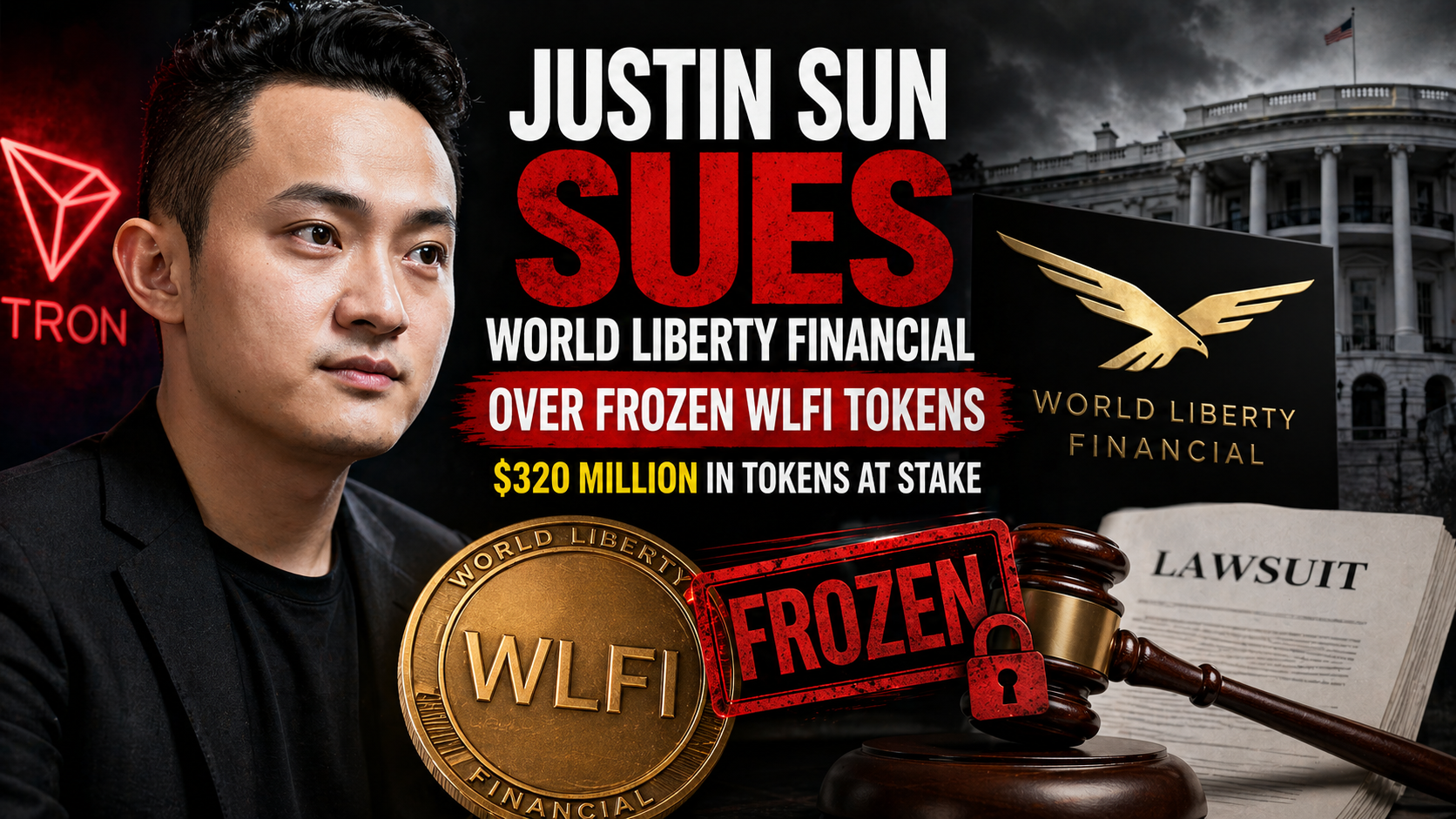
A major legal battle has erupted in the cryptocurrency industry after Justin Sun, the billionaire founder of the Tron blockchain, filed a lawsuit against World Liberty Financial, a crypto venture linked to the Trump family. The lawsuit centers on Sun’s claim that World Liberty Financial illegally froze his WLFI tokens and threatened to permanently delete, or “burn,” his holdings. Reuters reported that Sun’s WLFI portfolio is worth roughly $320 million, based on the latest token price.
The case is drawing attention because it involves several sensitive issues in crypto: token ownership, centralized control inside digital assets, investor rights, governance transparency, and the legal responsibilities of crypto projects. For ordinary investors, the dispute is a reminder that owning a token does not always mean full control if the project’s smart contract or governance structure gives issuers special powers.
What Happened?
According to Reuters, Justin Sun filed the lawsuit in federal court in California, accusing World Liberty Financial of freezing his WLFI tokens and preventing him from selling them after they became tradable. The lawsuit also alleges that the company secretly installed tools in the token contract that allowed it to restrict his ability to trade.
Sun claims he bought $45 million worth of WLFI tokens, equal to around 3 billion tokens, and later received another 1 billion tokens after being named as an adviser, according to Reuters-based reporting from ABC. That brought his total WLFI holdings to around 4 billion tokens.
World Liberty Financial has disputed Sun’s claims. Reuters reported that the company said Sun was not an adviser and never held an operational role. The firm has also denied wrongdoing and said Sun’s alleged misconduct forced it to act.
Why the Token Freeze Matters
The most important issue in this case is not only the amount of money involved. It is also the question of control.
Many crypto investors believe digital assets give them direct ownership and control through their wallets. However, some tokens include smart contract functions that can freeze transfers, blacklist wallets, or restrict trading under certain conditions.
In some cases, these tools are used for compliance, fraud prevention, sanctions enforcement, or security emergencies. But if token issuers can use them without clear rules, investors may face serious uncertainty.
Sun’s lawsuit claims World Liberty used hidden tools to stop him from selling his tokens. World Liberty has denied that it acted improperly. The court will need to examine the facts, the token documents, the smart contract design, and the legal rights of both sides.
A Bigger Question: Are Crypto Tokens Really Decentralized?
The dispute also raises a larger question for the crypto industry: how decentralized are token projects if issuers can freeze or restrict holders?
Many crypto projects promote decentralization, but in practice, some tokens remain controlled by development teams, foundations, companies, or insiders. This can create a conflict between marketing language and technical reality.
If a token contract includes blacklist or freeze functions, investors need to understand how those functions work, who can use them, and under what conditions. Without clear disclosure, token buyers may not fully understand the risks.
This is why transparency is so important. A crypto project should clearly explain whether it has the power to freeze wallets, pause transfers, block selling, or change governance rights.
Why Investors Are Watching Closely
This lawsuit is important for investors because it may influence how courts view token-holder rights. If the court gives weight to Sun’s claims, it could increase pressure on crypto projects to disclose more about token controls and governance powers.
On the other hand, if World Liberty Financial successfully argues that it acted within its rights, it may support the idea that token issuers can restrict wallets in certain situations, especially if they believe there are compliance or misconduct concerns.
Either way, the case could become an important example for the crypto market.
It may also affect investor confidence in WLFI and similar token projects. When a high-profile investor says his holdings were frozen, other token holders may ask whether their own assets could face similar restrictions.
The Political and Business Angle
The case is also attracting attention because World Liberty Financial has been associated with the Trump family. Reuters described the company as a digital currency venture co-founded by U.S. President Donald Trump and his sons.
Because of that connection, the lawsuit is not only a crypto business story. It also touches politics, regulation, public trust, and conflicts of interest. However, the core legal question remains focused on whether Sun’s WLFI tokens were wrongfully restricted and whether World Liberty had the right to take those actions.
For investors, the political side may create more headlines, but the token-control issue is the part that matters most for long-term market confidence.
What This Means for Retail Crypto Buyers
Retail investors should not ignore this case. It shows that before buying any token, people should look beyond price charts, hype, and influencer promotion.
Important questions include:
Does the token contract allow freezing or blacklisting?
Who controls the contract?
Can the issuer pause transfers?
Are early investors restricted from selling?
Are governance rights clearly explained?
Has the project published full tokenomics and legal disclosures?
These questions may sound technical, but they can directly affect whether an investor can sell, transfer, or use a token.
Possible Impact on the Crypto Industry
The lawsuit could increase pressure for stronger disclosure standards in token launches. Crypto projects may need to clearly explain hidden controls, founder powers, unlock schedules, and investor restrictions.
It may also push regulators to look more closely at how token issuers communicate with buyers. If investors are told they own a digital asset, but the issuer can later freeze or destroy that asset, regulators may see that as a consumer protection issue.
The case may also encourage investors to demand independent smart contract audits. A proper audit can help identify whether a token contract includes admin controls, freeze functions, upgrade powers, or blacklisting tools.
Conclusion
Justin Sun’s lawsuit against World Liberty Financial is more than a dispute between a billionaire crypto investor and a high-profile token project. It highlights a major issue in the digital asset market: who really controls a token after it is sold?
If Sun’s claims are proven, the case could become a warning about hidden contract powers and weak investor protections. If World Liberty Financial successfully defends its actions, the case may show that token issuers can restrict holdings under certain conditions.
For now, the dispute remains unresolved. But one lesson is already clear: crypto investors should always study token rules, smart contract controls, and governance rights before buying any digital asset.
Disclaimer: This article is for informational purposes only and should not be considered financial or legal advice. Cryptocurrency investments are risky, and readers should do their own research before making any investment decision.